
The PCB sunroom problem nobody warns you about
You built or bought a sunroom in Panama City Beach to enjoy that emerald water view, and by July you can barely sit in it past 9am. A west-facing glass room on the Gulf can hit 95F inside even with the AC cranked, and the glare off the water is brutal enough to wash out a 75 inch TV screen completely.
The instinct is to hang heavy curtains and block it all out. That solves the heat problem and destroys the whole reason you have a sunroom. There is a better way, and we have been installing it on Panhandle homes since 1996.
The right window treatment strategy lets you cut solar heat gain by 70 percent or more while keeping a clear sightline to the water. This post walks through exactly how to do it: materials, openness factors, and the specific products that hold up in salt air without warping, corroding, or fading inside of two seasons.
The right shades for a PCB sunroom do two jobs at once: they block the heat that makes the room unusable and preserve the Gulf view that made you want the room in the first place.
Why sunrooms on the Gulf Coast are a different animal
A sunroom in Atlanta deals with sun. A sunroom on Panama City Beach deals with sun plus salt-laden humidity, plus UV levels that are measurably higher than what inland installers account for when they spec fabrics. We have pulled shades out of Rosemary Beach and Inlet Beach sunrooms after three years that were installed by out-of-area contractors using standard interior fabrics. The color had shifted two shades and the fiberglass weave had begun to break down at the hems.
The other factor is the reflective load. Water and white sand amplify direct sun. A west-facing sunroom in the Shores or along Front Beach Road is not just fighting the afternoon sun; it is fighting the sun bouncing off the Gulf. That reflected component adds meaningful heat gain that standard solar-heat-gain coefficients do not fully capture.
Any treatment you put in a PCB sunroom needs to be spec'd for coastal UV exposure, high humidity, and the specific orientation of your glazing. There is no one-size-fits-all answer, but there are clear winners.
The best window treatment options for a PCB sunroom
Solar roller shades, the workhorse solution
Solar roller shades are the single most effective tool we have for the heat-versus-view tradeoff. The key spec is openness factor, the percentage of open weave in the fabric. A 1 percent openness fabric blocks roughly 99 percent of visible light and is essentially opaque. A 10 percent openness fabric lets in a lot of light but still cuts significant UV and infrared heat. For most PCB sunrooms, we recommend a 3 to 5 percent openness factor on south-facing and west-facing glass.
At 3 percent openness you can still see the water clearly from inside when there is daylight outside, but you have cut glare dramatically and reduced solar heat gain enough to drop the room temperature by 10 to 15 degrees on a clear August afternoon. At night, privacy reverses: you can see out, people outside can see in. So some clients layer a light-filtering privacy shade behind the solar shade for evening use.
For fabric, we use PVC-coated fiberglass almost exclusively in coastal installations. It does not absorb moisture, it does not support mold growth, and it does not degrade under constant UV the way polyester blends do. Brands like Mermet and Phifer manufacture fiberglass solar fabrics that carry 10 year warranties and genuinely hold up to them on the Gulf.
Motorized shades, the practical upgrade for large sunrooms
A sunroom typically has more glass than any other room in the house. Manually adjusting six to twelve individual shades every time the sun angle shifts is not realistic. Motorization solves that immediately.
With a Somfy or Lutron motor system, you can group all your south-facing shades on one scene, your west-facing shades on another, and drop them all from your phone or a wall button before you sit down with your morning coffee. Some of our PCB clients set a schedule (shades drop automatically at noon and rise at sunset) so the room manages itself without any input from you.
For vacation rentals along 30A or on the west end of PCB, motorization is not a luxury. It is a management tool. Guests do not know how to operate manual systems. Motorized shades with a simple app or remote protect expensive fabric from being left in full sun all day while the unit sits vacant. See our motorized shades in Destin page for more on the integration we recommend.
Woven wood shades, when you want warmth and texture
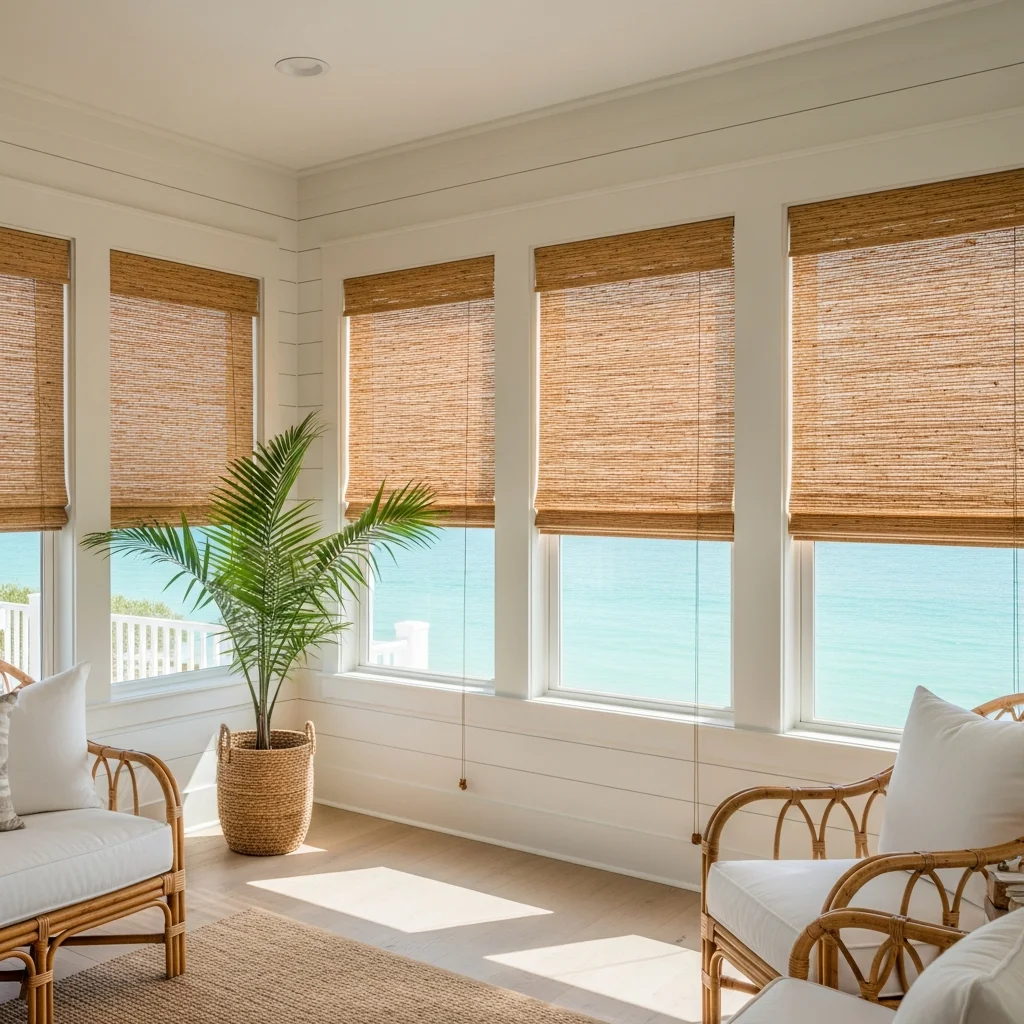
Not every sunroom is a glass box facing the water. Some are three-season rooms with partial walls, or they face north or east and the heat load is manageable. In those situations, woven wood shades add texture and a natural aesthetic that reads beautifully against coastal decor: whitewashed wood floors, rattan furniture, the pale blues and greens of Gulf-front design.
The caveat is honest: natural woven wood does not handle sustained humidity as well as fiberglass solar fabric. We steer clients toward woven woods in covered lanais, east-facing morning rooms, or interior-adjacent sunrooms with good ventilation. Direct west-facing glass in a sealed sunroom is a harder environment for natural materials. We will tell you that straight, the same way we would tell a neighbor.
If the aesthetic of woven wood is what you are after but you have a tough west-facing exposure, we can often layer a solar roller shade behind a woven wood valance. You get the warmth of the natural material visually, and the solar shade does the performance work.
What to avoid in a PCB sunroom
- Fabric drapes or curtains. They trap heat against the glass, absorb humidity, and grow mildew inside of one summer in a coastal environment. We have replaced plenty of them.
- Aluminum mini-blinds. They conduct heat directly into the room, the slats warp in humidity, and the tilt mechanisms corrode from salt air within a couple of years. A short-term solution that ends up costing more over time.
- Cheap polyester roller shades. Big-box roller shades are not rated for sustained coastal UV. The fabric yellows, the hem bar rusts, and the cassette mechanism binds from humidity swelling. By year two you are replacing them.
- Nothing. Unshaded sunroom glass in Panama City Beach accelerates fading on every piece of furniture, flooring, and artwork in the room. UV exposure through uncoated glass is aggressive and cumulative.
The installation details that make the difference
In a standard bedroom, a roller shade installation has maybe two or three mounting considerations. In a sunroom, you are often dealing with aluminum or thermally-broken framing, glass-to-ceiling installations with no drywall return, angled roof glazing, and transom windows above standard openings. The hardware choices matter.
We use stainless steel and marine-grade hardware in all coastal sunroom installations. Standard zinc hardware, the kind most national chains use, begins to show corrosion within a year at Gulf-front properties. We have been doing this long enough to know which fasteners and bracket materials hold up and which ones do not.
Inside mount versus outside mount is another decision that requires an eye on the actual frame. Some sunroom frames are too shallow for a standard inside-mount roller cassette. We measure before we order, every time.
If you have arch or palladium windows in your sunroom, those require custom-fabricated treatments, there is no off-the-shelf solution that works. We have fabricated arch treatments for homes in WaterColor, Rosemary Beach, and along the Santa Rosa Boulevard corridor in Navarre for nearly three decades.
Ready to actually use your sunroom year-round?
A properly shaded sunroom in Panama City Beach is genuinely usable from January through December. The right solar shades at the right openness factor, installed on marine-grade hardware with a motorized system, will cut your cooling load, protect your furnishings, and keep the Gulf view that you paid for clearly in frame.
We serve Panama City Beach, Destin, Navarre, Gulf Breeze, Fort Walton Beach, Pensacola, and communities across the Panhandle and south Alabama. Our team does free in-home consultations. We come to you, measure the actual glass, and tell you exactly what we would put in our own homes. Call us at 850-889-7772 or schedule your free consultation online. We respond within one hour.